

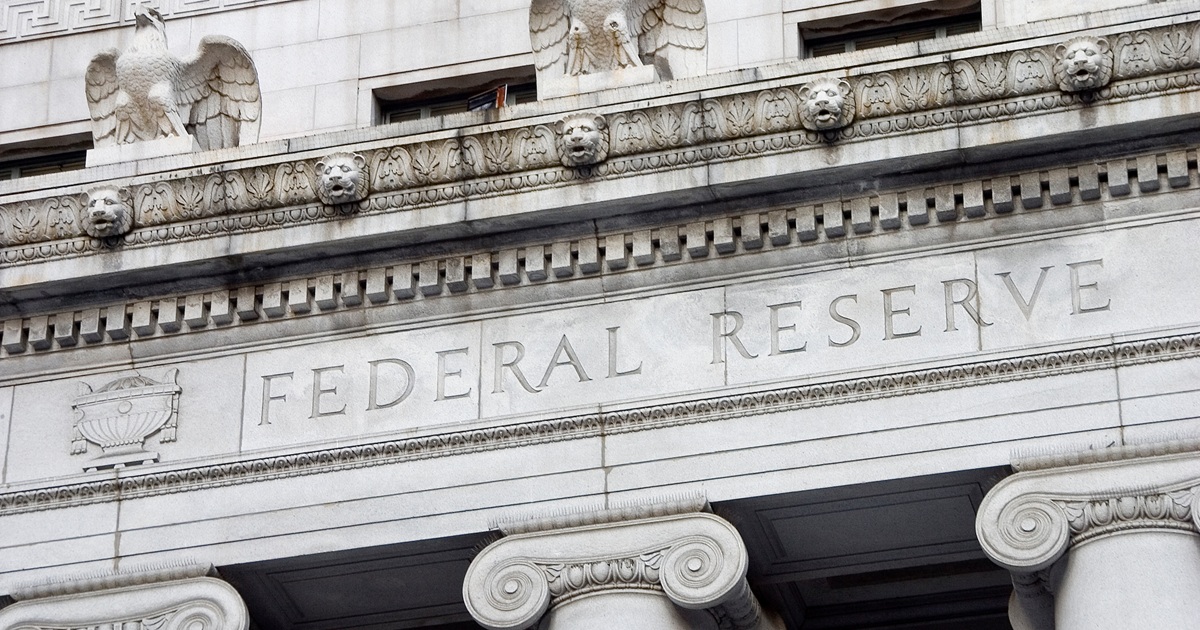
“Shams and delusions are esteemed for soundest truths, while reality is fabulous…
When we are unhurried and wise, we perceive that only great and worthy things have any permanent and absolute existence,
that petty fears and petty pleasures are but the shadow of the reality.”
-Walden by Henry David Thoreau
PARADIGM SHIFT
The Fed’s Secret Weapon
There are two main tools that the Federal Government and the Federal Reserve use to target full employment and a 2% average annual inflation rate.
Fiscal and monetary policy.
Fiscal policy is in the hands of the Congress and President. Monetary policy is in the hands of the Federal Reserve.
Fiscal policy could be the creation of government jobs (known as demand-side economics), or it could be lowering taxes and deregulating (known as supply-side economics).
Monetary policy comes in the form of buying and selling government bonds, or simply allowing them to expire.
But there’s another tool that rarely gets discussed. That is the tool of psychology.
The Fed has a slew of research and mathematical formulas in its vault about how consumer expectations play just as much a part in the health of an economy as do the Fed’s monetary actions.
In the medical field, there’s the placebo effect. In economics, there’s something very akin to this same concept. And the Fed uses it as a secret weapon to combat inflation and unemployment.
You see, the Fed operates largely based on an economic theory called Keynesianism. In Keynesianism, the intentional raising and lowering of interest rates through the purchase, sale or expiry of US Treasuries, is the method by which the Fed attempts to achieve its two mandates: full employment and low inflation.
But here’s the problem.
If they lose control of the narrative, and people begin to BELIEVE that high inflation is here to stay, then high inflation very likely will be here to stay.
Why?
Because if someone doesn’t believe a dollar today will buy as much as a dollar next year, then they will buy their good or service now instead of later. If too many people do this, the near-term increase in demand will push up the price of goods and services.
This increase in price simply confirms in the minds of more individuals that inflation is, indeed, here to stay. And contagion happens.
To fight the inflation, the Fed then has to raise interest rates higher. But if the economy starts to suffer, they have to make a choice whether to fight inflation with high interest rates or to stimulate job growth with low interest rates.
The good thing about this potential is that, so long as the money supply (M2) doesn’t accelerate too rapidly along with velocity of money, the greater demand will eventually inspire greater supply, bringing prices back to a more stable level relatively quickly.
But here’s the more dangerous scenario this time around.
If interest rates are higher than expected inflation (which right now they are!), people may slow spending and increase saving in order to guard against future economic downturns while also increasing purchasing power with guaranteed interest. This opposite action of slowing spending can induce recession!
It’s a slippery slope: too much or too little spending can lead to economic challenges. But the latter scenario, in my opinion, is more dangerous than the former at this point. Which is why I believe it’s in the Fed’s best interest to lower interest rates in this month’s meeting by 25 bps (0.25%).
Have you heard the Fed use the word “transitory” with regard to inflation? Part of the fight against inflation is monetary policy; the other part is the attempt at self-fulfilled prophecy. That’s done by a careful selection of words to set widespread expectations, therefore affecting everyday consumer activity.
They have to choose their words carefully so as not to imply that they are accelerating their planned interest rate cuts, which could increase concern about inflation.
So what is our best course of action in this big picture?
What can we personally do?
It’s very simple. Here’s the answer:
Don’t make buying decisions based on fear.
In other words, don’t change how you spend your money because you’re afraid of an unknown future.
Money is money. It might be worth 3% less or 5% less a year from now. But there’s no limit to what you personally can be worth in earning potential a year from now. And that comes, not from over-saving greedily or overspending fearfully, but by establishing regular habits that improve your education, experience and ability to add value to a company (even your own!).
That will have a much higher return on investment for you, and a much better impact on society more generally, than trying to save or spend to fare just a smidge better in difficult economic times.
An emergency fund is a must. This covers 3-6 months of living expenses. But this should always be a part of someone’s financial plan, not just when the economy starts to get shaky.
Fortunately, the Federal Reserve has shown that even with all the talk about tariffs, the Survey of Consumer Expectations from February shows that 3- and 5-year expectations for future inflation have remained unchanged at 3%.
Stocks typically weight the next 3 to 30 months most heavily when determining a present value. If 3-year inflation remains unchanged, even with all the new tariffs, then the main threat of recession comes not necessarily from expected inflation but from the Federal Reserve making a mistake in its choice of keeping interest rates too high for too long.