

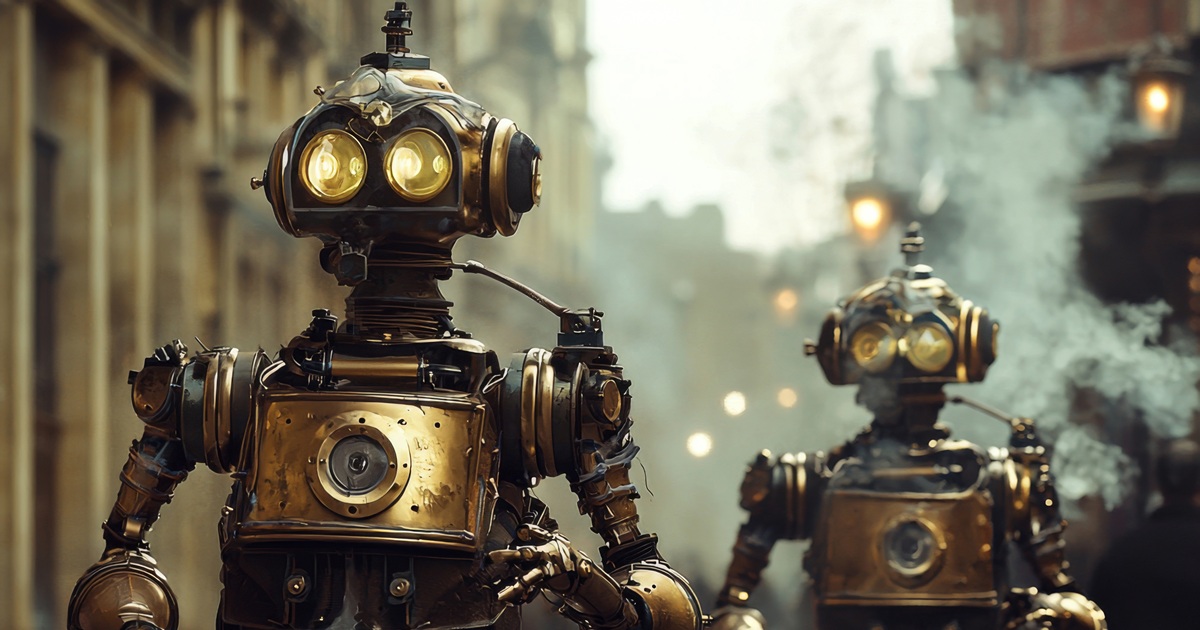
“The world creates new, different and better jobs that require a whole lot less onerous, brutish reality than the agricultural worker in 1900 had to undergo. AI will just extend that same process again.”
-Ken Fisher (founder of Fisher Investments)
PARADIGM SHIFT
Will AI Make Us All Rich (Or Poor)?
It’s the question on everyone’s mind:
Will artificial intelligence make human work obsolete?
If so, will that reduce our earning capacity? If not, will it improve our earning capacity?
Feifei Li, CFA, offers her insight in the podcast from Enterprising Investor, specifically pertaining to the investment world.
In her perspective, the present development of AI will improve our earning capacity.
Why?
Because AI is nowhere near the point of being unquestionable. It still suffers from “hallucinations” and from occasionally misunderstanding the relevance of certain information.
In other words, a human expert still needs to confirm whether the outputs are accurate.
That’s good news for experts. But what about those just starting out in entry level positions?
It’s true that certain entry level tasks will be replaced, mainly in the realm of data entry or data consolidation. But that should be good news, because this frees up the newcomer to focus on more useful experience that is less busywork and more likely to advance their potential faster.
For investment research, AI still outputs what it’s programmed to do. It can learn, but it won’t be privy to this or that specific investment strategy that is proprietary to a company’s strategic edge.
So it won’t remove human’s need and ability to strategize, but it will speed up the investment research process.
But machines can learn, right? So no one knows exactly where the limits of their use will be. Elon Musk speculated last week that AI will be smarter than all humans combined by around 2030. He also gives this an 80% chance at having extraordinarily positive benefits.
Doing more with less is a positive for every economy. That’s efficiency driving economies higher in spite of a declining birth rate.
In a theoretical world driven largely by machines, this would mean greater earnings for less work. This is much like the way that other machine, transportation and communication advancements have radically improved the lives of the whole world over the last century.
In short, on the economic front, AI can be a tremendous asset to future wealth across every social standing. But, as with the basic internet before it, great responsibility and intentionality needs to accompany the shift toward this new way of doing things.
The human touch will never be replaced. No matter how advanced a machine can become, the knowledge of a reciprocal human mind and emotion in our daily interactions will always be in some demand. But like the internet, phones and social media before it, we as humans may simply need time to experiment and learn how best to maintain AI as a net positive tool while staying true to our human selves along the way.